
Most homeowners we meet have already decided they want the basement done. What stops them isn’t the design, and it isn’t finding a contractor. It’s that the money is sitting in the house instead of in the bank account.
There are five realistic ways to pay for a basement build in the Greater Toronto Area, and they are not interchangeable. One is the cheapest but the slowest. One is the fastest but costs more. One quietly resets your entire mortgage. Here is what each one actually involves, so you can choose before the quotes start arriving instead of scrambling after.
Before you compare lenders, understand what you’re financing
You cannot price financing on a number you don’t have. And a real number for a basement depends less on square footage than on what the space needs before finishing can even start.
The items that move a basement budget most:
Egress windows. A legal bedroom below grade needs a code-compliant window opening. Cutting concrete and installing a window well is a real line item, not a rounding error.
Ceiling height. If you’re short of the required clearance, you’re looking at underpinning or a lowered floor. This is the single biggest swing in basement work, and it’s the reason two houses on the same street can have wildly different quotes.
Electrical panel capacity. A second kitchen, in-suite laundry, and separate heating often push an older panel past what it can carry.
Fire separation and HVAC. A legal secondary suite has requirements a rec room simply doesn’t.
Permits and drawings. Non-optional if the suite is going to be legal, and worth understanding before you budget. We break the process down in our guide to what actually makes a basement legal in Toronto.
This is why we don’t quote on the spot. We do a free site visit, check egress, ceiling height, moisture, and your electrical panel, measure everything, and then produce a written, itemized quote. A quote that doesn’t name these items is a quote that will change later.
Option 1: Home equity line of credit (HELOC)
Best for: homeowners with substantial equity who want the lowest rate and can afford to wait for approval.
A HELOC is secured against your home, which is why it prices below unsecured credit. You draw only what you need and pay interest only on what you’ve drawn — genuinely useful on a renovation where money goes out in stages rather than all at once.
What to know:
- HELOCs in Canada are typically variable rate, tied to your lender’s prime rate. Your payment moves when prime moves.
- There are federal limits on how much of your home’s value can sit in a revolving HELOC, and a separate cap on total borrowing against the property. Your lender will tell you where you land.
- Approval requires an appraisal and full income qualification. Think weeks, not days.
- If your mortgage is with a different lender, setting up a HELOC may mean registering a new charge on title, with legal costs attached.
The trade-off: cheapest money, slowest to arrange, and it only works if the equity is already built up.
Option 2: Mortgage refinance
Best for: homeowners who need a large sum and are approaching renewal anyway.
You break or renew your existing mortgage, take out a larger one, and keep the difference. The renovation then gets absorbed into your full amortization, which keeps the monthly payment low.
What to know:
- Breaking mid-term costs money. Prepayment penalties on fixed mortgages in Canada are usually the greater of three months’ interest or an interest rate differential calculation. IRD penalties can be brutal. Get the exact number from your lender in writing before you commit to anything.
- Refinancing requalifies your entire mortgage at today’s rates, not just the new portion. If rates have moved since you last signed, you may be repricing the whole balance.
- You’re stretching a renovation over decades. Low monthly payment, high total interest.
- Some lenders will count a portion of projected basement rental income toward your qualification, but the percentage varies by lender and generally requires the suite to be legal and documented. A mortgage broker can tell you which lenders are generous here and which aren’t.
The trade-off: lowest monthly payment, but the real cost is buried in the amortization and the penalty.
Option 3: Unsecured personal loan or line of credit
Best for: smaller projects, or homeowners who don’t want a charge registered against the house.
Fast, no appraisal, no lawyer. Also the most expensive option in most cases, because there’s no collateral behind it — and unsecured limits are usually well below what a full basement suite costs.
The trade-off: speed and simplicity at a rate that makes sense for a small job and much less sense for a full build.
Option 4: Contractor financing
Best for: homeowners who want a fixed monthly number and a decision in days rather than weeks.
This is financing arranged through the renovation company at the point you approve the quote. We partner with Financeit, a Canadian financing platform used by thousands of home improvement companies across the country.
Here’s how it runs on our projects:
- We visit and measure. Free site visit. Egress, ceiling height, moisture, electrical panel, full measurements.
- You get a fixed quote. Written, itemized, and locked. Your monthly payment is confirmed at this stage — before you apply for anything.
- You apply online. The Financeit application takes a few minutes and approval usually comes back the same day.
- We build. Permits, trades, inspections, with updates at every stage.
- Sign-off and warranty. We walk the finished space together, you sign off on a defined checklist, and your warranty starts.
Financing is available up to $100,000, and it can be paid off early.
Whatever route you take — ours or a bank’s — ask every provider for four things in writing: the annual percentage rate, the term in months, the amount financed, and the total cost of borrowing. A monthly payment on its own tells you very little. Anyone reluctant to give you all four is telling you something.
You can see our current package structures on the financing page.
The trade-off: fastest and simplest, unsecured, and typically priced above a HELOC. You’re paying for speed. That’s a perfectly rational thing to buy — as long as you know that’s what you’re buying.
Option 5: Pay cash
Worth saying plainly, because it gets skipped. If money is sitting in a savings account earning less than the rate you’d pay to borrow, cash is the cheapest option available and no financing math changes that.
The reason people finance anyway is timing: the suite starts producing rent or usable living space now rather than in three years. That’s a legitimate argument. Just make it deliberately instead of by default.
Side by side
| HELOC | Refinance | Personal loan | Contractor financing | |
|---|---|---|---|---|
| Typical speed | Weeks | Weeks | Days | Days |
| Relative rate | Lowest | Low | Highest | Middle to high |
| Secured against home | Yes | Yes | No | No |
| Appraisal required | Usually | Usually | No | No |
| Payment stability | Variable | Fixed or variable | Usually fixed | Fixed |
| Best fit | Strong equity, patient timeline | Large sum, near renewal | Small project | Any size, want to start now |
The number that actually decides it: payment versus rent
If the basement is going to be rented, the real question isn’t “can I afford the payment.” It’s “does the rent cover the payment.”
Legal basement apartments across the GTA currently rent in roughly the $1,600 to $2,400 range, depending on the city, the size of the unit, whether there’s a separate entrance, and the level of finish. A legal one-bedroom suite in most GTA neighbourhoods rents comfortably above the bottom of that range.
That’s the market, not a promise. Nobody can guarantee you a rent figure, and you should be cautious with anyone who tries. What we can do at the site visit is show you what comparable suites in your specific area are actually listing and renting for, using current listings.
Then be honest about what comes off the top:
- Vacancy. Assume the unit sits empty for part of the year.
- Utilities, unless you’re separately metering.
- Income tax. Rental income is taxable. You can deduct a proportional share of eligible expenses, but the net is not the gross. Your accountant should see the numbers before your first filing — how you treat the rental portion of your home has long-term consequences when you eventually sell.
- Maintenance and turnover.
Run the arithmetic with a conservative rent, an honest vacancy assumption, and a real tax number. If it still works at conservative numbers, it works.
Not renting it out? The math still holds
Plenty of our clients aren’t looking for a tenant. They want their basement back.
Same fixed payment, same finished space, no strangers with keys. And a properly built, code-compliant basement keeps every option open — finish it as a family space today, rent it in five years when the kids move out.
The reasons people come to us:
Parents moving in. A proper suite downstairs means everyone has their own kitchen, their own bathroom, and their own door to close.
Teenagers who need somewhere to go. A rec room, a gaming setup, a second TV — and your main floor becomes yours again.
Working from home. A real office with a real door beats a laptop on the kitchen table.
Adult kids priced out of GTA rent. A private suite downstairs lets them save for their own place without anyone losing their sanity.
The storage dungeon. Boxes, cold concrete, one bare bulb. You’re already heating that square footage and already paying the mortgage on it. It should be doing something.
What to do, in what order
- Book a site visit and get a written, itemized quote. Everything downstream depends on having a real number.
- Confirm what the suite needs to be legal. The permit path affects both cost and timeline — our walkthrough of the actual permit process for a Toronto secondary suite covers what gets submitted and how long each stage takes, and the permits page explains what we handle on your behalf.
- Get one offer from your bank and one through the contractor. Compare annual percentage rate and total cost of borrowing side by side, not monthly payments.
- Decide before demolition starts. Arranging money mid-project is how people end up on the expensive option by default.
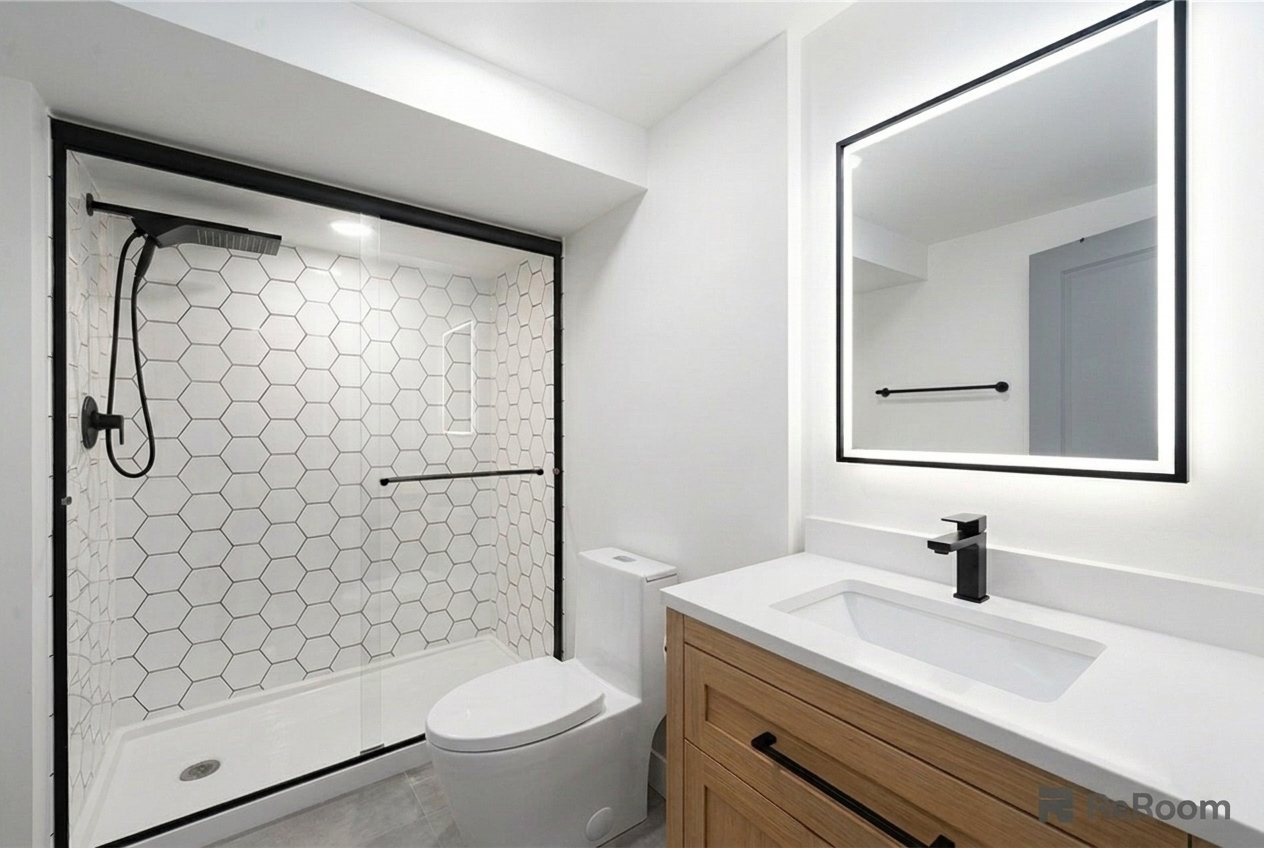
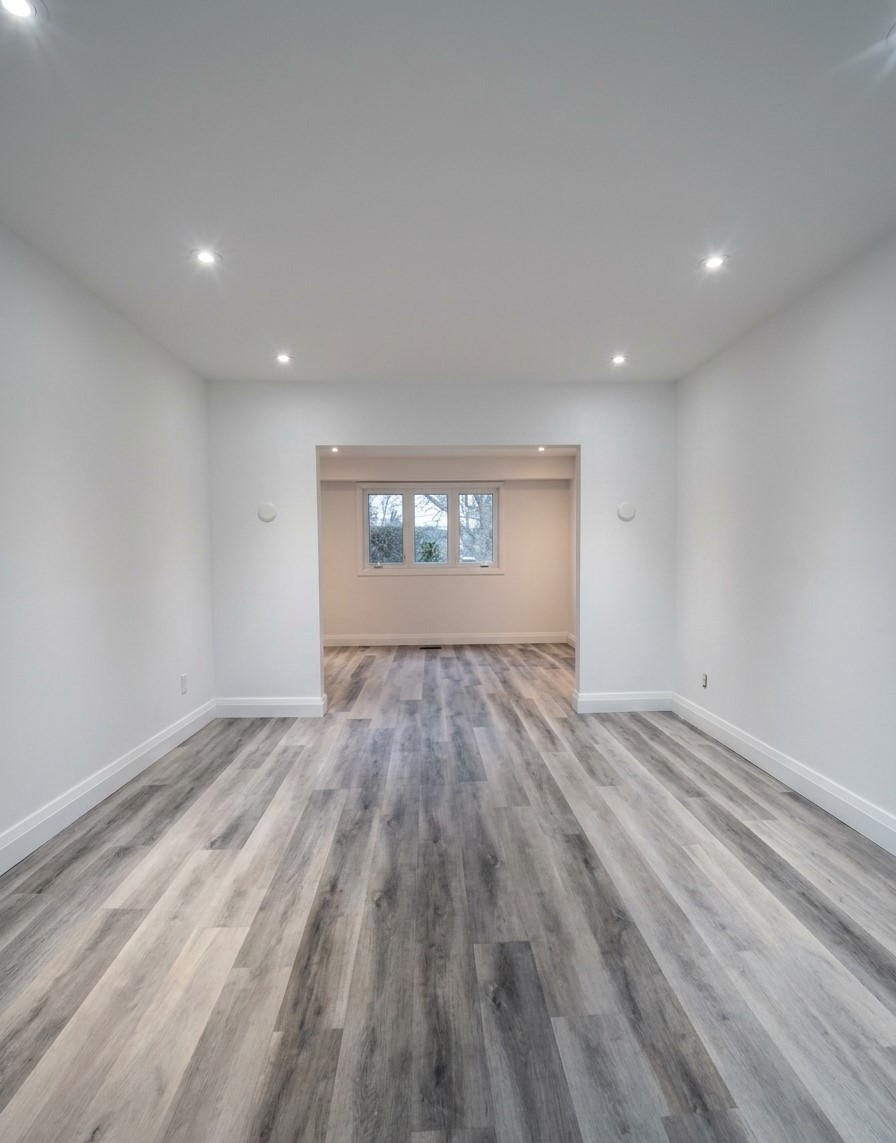
If you want to see what a finished build actually looks like, our portfolio has completed projects across the region, including a recent basement renovation in Markham. And if you’d like to understand how we run a job from first visit to final walkthrough, that’s laid out in how we work.
Frequently asked questions
Can I finance a basement renovation if it’s for my family and not a rental? Yes. The financing works the same whether a tenant pays the loan or you do. Plenty of our clients finance an in-law suite or a family space. You can review the options on our financing page.
Is a HELOC always cheaper than contractor financing? On rate, usually — it’s secured against your home. Whether it’s cheaper overall depends on setup costs, appraisal and legal fees, and how long you carry the balance. Compare total cost of borrowing, not the headline rate.
Do I need the permit approved before I arrange financing? No, and generally you shouldn’t wait. Get the quote, arrange the money, and let the permit run in parallel. Just make sure the quote accounts for what the permit review will require.
How long does the build take? A typical timeline is 6 to 10 weeks once permits are approved, depending on the scope. Permit approval itself varies by municipality and is outside any contractor’s control.
What if my basement needs extra work, like a larger egress window? Some basements need an egress window cut or other prep before a standard package applies. We identify that at the free site visit and price it before you sign anything. Your quote is your quote.
Is the rental income guaranteed? No — and be careful with anyone who says otherwise. What we can show you is what comparable suites in your area are currently listing and renting for.
How much can I finance? Up to $100,000 through our Financeit partnership, with the option to pay it off early.
Which cities do you work in? Richmond Hill, Markham, Vaughan, Thornhill, Newmarket, Aurora, Toronto and the surrounding GTA, and across the Greater Golden Horseshoe including Mississauga, Brampton, Caledon, Hamilton, Kitchener and Waterloo.
Get the number first
The foundation is poured. The walls are up. The heat is already on. You’re paying the mortgage on that square footage every month whether it earns anything or not.
One site visit tells you exactly what your basement can become and exactly what it costs per month. The visit is free and there’s no pressure to sign anything.
Book your free site visit, or call us at (647) 991-9222. We answer.
Learn more about our basement renovations and financing options.